Listen on:







Episodes
Sunday May 16, 2021
Friday May 14, 2021
Friday May 14, 2021
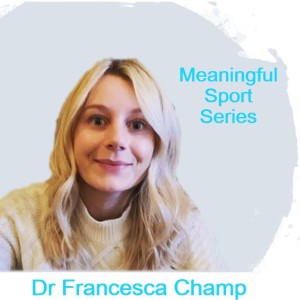
Neophyte sport psychology practitioners face many challenges, such as misconceptions about what sport psychology is and doubts about its effectiveness. Moreover, when a young female practitioner enters a professional football club, she is likely to face gender- and age-based prejudice. In this episode, Dr Francesca Champ shares her story of entering and working in a men's professional football environment over three seasons, providing psychology support to academy players and working with staff and parents. We also discuss women in sport psychology more broadly and the ways that working in an applied context has been meaningful for Fran, despite the challenges associated with the work.
Dr Francesca Champ is a lecturer in Psychology in Football at Liverpool John Moores University (UK) and an applied sport psychology practitioner, who has explored these questions in her research and practice. Her doctoral research was a practitioner-researcher ethnography in a professional football environment in the UK where she delivered applied sport psychology support over three seasons.
Francesca's research more broadly has explored psycho-social development and identity in professional football, organisational and cultural sport psychology, applied sport psychology consultancy and mental health in sport.
You can find out more about Fran's work in this area from these publications:
A tale of three seasons: a cultural sport psychology and gender performativity approach to practitioner identity and development in professional football
'Through the lens of ethnography': Perceptions, challenges, and experiences of an early career practitioner-researcher in professional football
And remember to follow Fran on Twitter: @fchamp1
Tuesday May 11, 2021
Tuesday May 11, 2021
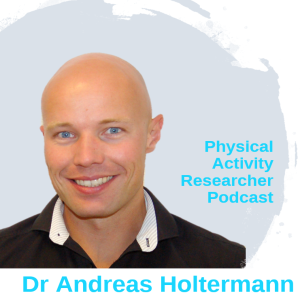
Standing at work
Andreas Holtermann is working as a professor at the National Research Centre for the Working Environment.
---
This podcast episode is sponsored by Fibion Inc. | The New Gold Standard for Sedentary Behaviour and Physical Activity Monitoring
Learn more about Fibion: fibion.com/research
---
Collect, store and manage SB and PA data easily and remotely -
Discover new Fibion SENS Motion: https://sens.fibion.com/
---
Sunday May 09, 2021
Sunday May 09, 2021
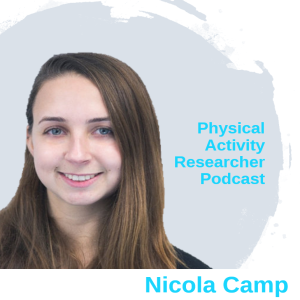
Nicola Camp is an Academic Associate at Nottingham Trent University.
---
This podcast episode is sponsored by Fibion Inc. | The New Gold Standard for Sedentary Behaviour and Physical Activity Monitoring
Learn more about Fibion: fibion.com/research
---
Collect, store and manage SB and PA data easily and remotely -
Discover new Fibion SENS Motion: https://sens.fibion.com/
---
Friday May 07, 2021
Friday May 07, 2021
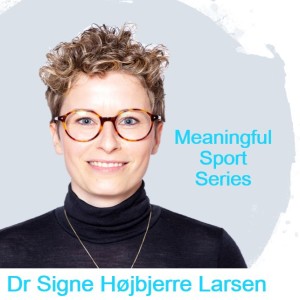
Parkour is a movement culture where practitioners use urban spaces and obstacles such as benches or rails for practising a variety of impressive movements. Its popularity has exploded in the recent years and for example in Denmark it is also a part of physical education. Today, we will explore parkour from a philosophical and sociological perspective and ask whether parkour can offer moments of non-alienated experience in urban spaces.
Dr Signe Højbjerre Larsen is an Associate Professor at the Department of Sports Science and Clinical Biomechanics at the University of Southern Denmark. Her research has focused on lifestyle sports and play, as well the institutionalisation of these activities.
Signe's articles on today's topic include:
What can the parkour craftsmen tell us about bodily expertise and skilled movement?
Parkour: playing the modern, accelerated city
Parkour as acrobatics: an existential phenomenological study of movement in parkour
Signe has also featured in "My Playground", a documentary on Parkour which you can access here: https://www.youtube.com/watch?v=iEFSXAgowV4
You can follow Signe on Twitter @signehoj
Tuesday May 04, 2021
Tuesday May 04, 2021
Physical Activity Paradox
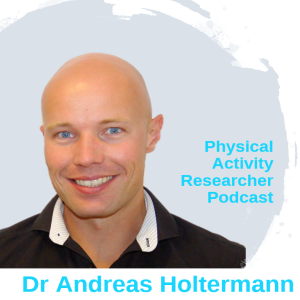
Andreas Holtermann is working as a professor at the National Research Centre for the Working Environment.
---
This podcast episode is sponsored by Fibion Inc. | The New Gold Standard for Sedentary Behaviour and Physical Activity Monitoring
Learn more about Fibion: fibion.com/research
---
Collect, store and manage SB and PA data easily and remotely -
Discover new Fibion SENS Motion: https://sens.fibion.com/
---
Friday Apr 30, 2021
Friday Apr 30, 2021
Becoming a professional footballer is a dream for so many young boys, but we know that only a very small fraction of them will ever play in senior-level professional sport. What are the implications for being involved in the talent development programmes in football academies for the identity development of these young people? What about the vast majority of youth players who never "make it"? Can they look back and say that being involved in a talent pathway was an enriching experience, despite not fulfilling their aspirations?
Dr Francesca Champ is a lecturer in Psychology in Football at Liverpool John Moores University (UK) and an applied sport psychology practitioner, who has explored these questions in her research and practice. Her doctoral research was a practitioner-researcher ethnography in a professional football environment in the UK where she delivered applied sport psychology support over three seasons. In our conversation, she shares her experiences and observations about the culture of professional football and what implications it can have for the development of youth players. Importantly, she also shares the practical ways she has worked towards supporting broader identity development in youth players.
Francesca's research has focused on psycho-social development and identity in professional football, organisational and cultural sport psychology, applied sport psychology consultancy and mental health in sport. You can read about the findings from her doctoral research in these articles:
An exploration of the experiences of elite youth footballers: The impact of organizational culture
A tale of three seasons: a cultural sport psychology and gender performativity approach to practitioner identity and development in professional football
'Through the lens of ethnography': Perceptions, challenges, and experiences of an early career practitioner-researcher in professional football
And remember to follow Fran on Twitter: @fchamp1
Tuesday Apr 27, 2021
Tuesday Apr 27, 2021
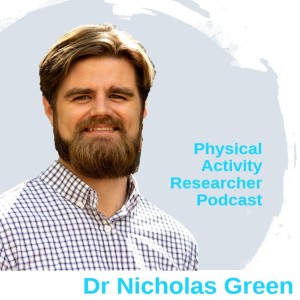
Dr Nicholas Green holds PhD in psychology from the University of Florida in Gainesville, FL. He is specialized in healthy behavior change by studying variables that promote the move moving in the workplace.He finished his master's degree at the Florida Institute of Technology in Melbourne, FL. In the School of Behavior Analysis, he specialized in Organizational Behavior Management (OBM), applying the science of human behavior to business, to make work life better. Specifically, he investigates motivational interventions to get office workers moving more.
---
This podcast episode is sponsored by Fibion Inc. | The New Gold Standard for Sedentary Behaviour and Physical Activity Monitoring
Learn more about Fibion: fibion.com/research
---
Collect, store and manage SB and PA data easily and remotely -
Discover new Fibion SENS Motion: https://sens.fibion.com/
---
Friday Apr 23, 2021
Friday Apr 23, 2021
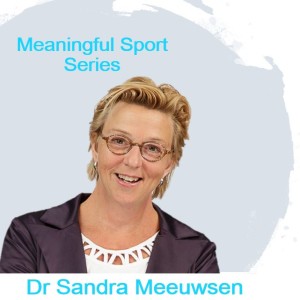
This is the second part of our conversation with Dr Sandra Meeuwsen on her thoughtprovoking PhD work where she used philosophical archaeology to shed light on how modern sport came to have such a contradictory face that is has today.
In the first part, Sandra shared her personal journey of working in the institutions of sport for three decades and started sharing on the methodology and key philosophical ideas informing her PhD work. In this part, we hear more about psychoanalytical theories, Nietzsche’s concepts of the Apollonian and Dionysian, and whether and how Sandra sees some hope for a brighter future for modern sport.
Dr Sandra Meeuwsen is a philosopher of sport who worked in various vital positions in sport since the early 1990s. She encountered these contradictions of sport in daily work which led her to embark on a PhD project to understand these issues. She completed her PhD in 2020 at the Faculty of Philosophy and Moral Sciences of the Vrije Universiteit Brussels with the thesis "A Critique of Sportive Reason; a philosophical archaeology of modern sport”.
You can find out more about Sandra's work at https://sandrameeuwsen.nl/ and follow her on Twitter @MeeuwsenPhd.
Updates will be added here when Sandra's work is published in English.
Tuesday Apr 20, 2021
Tuesday Apr 20, 2021
Dr Nicholas Green holds PhD in psychology from the University of Florida in Gainesville, FL. He is specialized in healthy behavior change by studying variables that promote the move moving in the workplace.He finished his master's degree at the Florida Institute of Technology in Melbourne, FL. In the School of Behavior Analysis, he specialized in Organizational Behavior Management (OBM), applying the science of human behavior to business, to make work life better. Specifically, he investigates motivational interventions to get office workers moving more.
---
This podcast episode is sponsored by Fibion Inc. | The New Gold Standard for Sedentary Behaviour and Physical Activity Monitoring
Learn more about Fibion: fibion.com/research
---
Collect, store and manage SB and PA data easily and remotely -
Discover new Fibion SENS Motion: https://sens.fibion.com/
---

Friday Apr 16, 2021
Friday Apr 16, 2021
In Norwegian educational discourse, 'shallow' and 'deep' learning are buzzwords that refer to two types of learning - memorizing facts vs making connections to previous knowledge structures and different contexts. While these forms of learning have been conceptualised in 'hard' school subjects, what could they look like in physical education? Can we make a link from 'deep' and 'shallow' learning to 'deep' and 'shallow' meaning in PE?
These and other interesting questions - such as, should sport and PE always aim to be fun? - are tackled in this second part of our conversation with Øyvind Standal, a Professor at the Faculty of Education and International Studies at Oslo Metropolitan University, Norway.
Prof. Standal has published extensively on physical education, especially in relation to the philosophy of physical education and phenomenology, embodiment, skills and habits. He is the author of the book Phenomenology and Pedagogy in Physical Education (Routledge, 2015).
We are partly building on Part 1 of our conversation, so it is a good idea to start with that: https://paresearcher.podbean.com/e/standal/
Tuesday Apr 13, 2021
Tuesday Apr 13, 2021
Challenges related to menstrual cycle, hormonal contraceptives and their side effects.
Dr Ritva Taipale has done her PhD on combined strength and endurance training in recreational endurance runners. Currently, she is working as a post-doctoral researcher in University of Jyväskylä (in Vuokatti Campus) focusing on exercise physiology of women and sport and wellness tech.
Timestamps
2:20 What are the main challenges related to menstrual cycle?
6:30 Alleviation PMS symptoms
8:00 Should athletes use hormonal contraceptives?
10:00 Does hormonal contraceptives affect hypertrophy?
12:00 Why studying hormonal contraceptives in athletes more complex than it seems atfirst glance?
15:00 What coaches and parents should know about amennorhea?
17:15 What are the biggest challenges in exercise physiology of women?
…
---
This podcast episode is sponsored by Fibion Inc. | The New Gold Standard for Sedentary Behaviour and Physical Activity Monitoring
Learn more about Fibion: fibion.com/research
---
Collect, store and manage SB and PA data easily and remotely -
Discover new Fibion SENS Motion: https://sens.fibion.com/
---
Friday Apr 09, 2021
Friday Apr 09, 2021
The classic sociological writings (Mills, 1951; Sennett, 2008) describe craftsmanship as a desire to do our work well “for its own sake”. Craftsmanship involves a holistic understanding of the craft and possession of tacit knowledge that is difficult to articulate. It is often considered a critical theory that is a response to alienating conditions in our work and educational institutions. Can craftsmanship provide a way to rethink our cultures of work, school and sport to provide more opportunities for ownership and meaningful experiences?
In this second part of our conversation, we explore the studies that have been conducted in movement culture and sports contexts. We also discuss the relationship between meaningfulness and meaninglessness, and end with an important note that although craftsmanship seems a promising concept, it is only one potential avenue that could contribute to meaningfulness in sport.
It is a good idea to start with Part 1 which can be accessed here: https://paresearcher.podbean.com/e/ronkainen1/
Tuesday Apr 06, 2021
Tuesday Apr 06, 2021
Exercise physiology of women, and more specifically menstural cycle and exercise.
Dr Ritva Taipale has done her PhD on combined strength and endurance training in recreational endurance runners. Currently, she is working as a post-doctoral researcher in University of Jyväskylä (in Vuokatti Campus) focusing on exercise physiology of women and sport and wellness tech.
Timestamps:
2:30 Hear about unique sports technology dual career pathway for athletes!
6:30 What is the state of research in exercise physiology of women?
8:15 What are other important topics of exercise physiology of women?
9:15 Basics of menstrual cycle
12:15 How menstrual cycle is affecting exercising and sports?
14.30 Important points of female athletic triad
17:00 How common is energy availability problems in female athletes?
18:30 Should endurance sports have minimum fat percentage limit?
22:30 What mistake coaches should avoid doing with women athletes?
25:00 What are long-term health consequences of female athlete triad?
27.30 Energy availability is problem also for male athletes!
29:45 Osteoporosis in road cyclists
---
This podcast episode is sponsored by Fibion Inc. | The New Gold Standard for Sedentary Behaviour and Physical Activity Monitoring
Learn more about Fibion: fibion.com/research
---
Collect, store and manage SB and PA data easily and remotely -
Discover new Fibion SENS Motion: https://sens.fibion.com/
---
Thursday Apr 01, 2021
Thursday Apr 01, 2021
Modern sport has an increasingly contradictory face: on the one hand, we can see a positive impact of sport in our societies, but on the other hand, we increasingly often hear about abuse and misconduct in sport, including sexual harassment, doping and corruption. How can we make sense of these contradictory trends and how can philosophical analysis help us to vision a more balanced, or more meaningful future for sport?
Dr Sandra Meeuwsen is a philosopher of sport who worked in various vital positions in sport since the early 1990s. She encountered these contradictions of sport in daily work which led her to embark on a PhD project to understand these issues. She completed her PhD in 2020 at the Faculty of Philosophy and Moral Sciences of the Vrije Universiteit Brussels with the thesis "A Critique of Sportive Reason; a philosophical archaeology of modern sport”.
In her thesis, she drew on Foucault, Agamben, Spinoza and psychoanalytical approaches to analyse our ‘knowing’ about what sport is - and what is excluded - and the shifts in this knowledge we’ve had since the rise of modern sports to its current existence.
You can find out more about Sandra's work at https://sandrameeuwsen.nl/ and follow her on Twitter @MeeuwsenPhd.
Tuesday Mar 30, 2021
Tuesday Mar 30, 2021
In this episode host Olli Tikkanen takes role of a guest as Melissa Boswell and Hannah O’Day take the roles of hosts. Melissa and Hannah are from podcast called Biomechanics of Our Mind’s (https://soundcloud.com/biomechanics-on-our-minds) they talk to researchers around the world about the exciting field of biomechanics.
Check the episode and find out, how did Olli end up recording podcasts in a freezing camper van?
---
This podcast episode is sponsored by Fibion Inc. | The New Gold Standard for Sedentary Behaviour and Physical Activity Monitoring
Learn more about Fibion: fibion.com/research
---
Collect, store and manage SB and PA data easily and remotely -
Discover new Fibion SENS Motion: https://sens.fibion.com/
---
Friday Mar 26, 2021
Friday Mar 26, 2021
Meaning has been a core concept for physical educators for a very long time, and often explored through a phenomenological perspective. Why is phenomenology central for understanding meaningful movement and physical education as an educational subject rather than mere physical activity? Are habits more than automated actions and important for meaning?
These and other interesting questions are tackled today with Øyvind Standal, a Professor at the Faculty of Education and International Studies at Oslo Metropolitan University, Norway.
Prof. Standal has published extensively on physical education, especially in relation to the philosophy of physical education and phenomenology, embodiment, skills and habits. He is the author of the book Phenomenology and Pedagogy in Physical Education (Routledge, 2015).
Tuesday Mar 23, 2021
Tuesday Mar 23, 2021
In this episode we have two Ph.D. students from Stanford University Melissa Boswell and Hannah O’Day. In their podcast called Biomechanics of Our Mind’s (https://soundcloud.com/biomechanics-on-our-minds) they talk to researchers around the world about the exciting field of biomechanics.
We get to hear how their podcast got started, what kind of challenges they have faced, what do they like most in podcasting- and what would be their advice to researcher who are considering starting a podcast.
---
This podcast episode is sponsored by Fibion Inc. | The New Gold Standard for Sedentary Behaviour and Physical Activity Monitoring
Learn more about Fibion: fibion.com/research
---
Collect, store and manage SB and PA data easily and remotely -
Discover new Fibion SENS Motion: https://sens.fibion.com/
---
Friday Mar 19, 2021
Friday Mar 19, 2021
What are the different things in your life that you do for their own sake? Is sport or exercise one of them?
The classic sociological writings (Mills, 1951; Sennett, 2008) describe craftsmanship as a desire to do our work well “for its own sake”. Craftsmanship involves a holistic understanding of the craft and possession of tacit knowledge that is difficult to articulate and is often considered a critical theory that is a response to alienating conditions in our work and educational institutions. There is a recent interest in studying craftsmanship in various organizations as well as leisure contexts, and one of them is sport and movement cultures.
In this episode, the podcast hosts Olli and Noora explore the ideas about craftsmanship and why they are promising when we are aiming to expand our understanding of what makes movement meaningful.
Tuesday Mar 16, 2021
Tuesday Mar 16, 2021
Part 2. Mr Peter Walker - Sedentary Behaviour | New book | Writing a book | Creating an audio book
In this episode we are discussing with Guardian political journalist Peter Walker about his new book (The Miracle Pill – Why a sedentary world is getting it all wrong), journalism, politcs and process of writing a book.
“What is the 'miracle pill', the simple lifestyle change with such enormous health benefits that, if it was turned into a drug, would be the most valuable drug in the world? The answer is movement and the good news is that it's free, easy and available to everyone.”
Timestamps:
2:30 What valuable Peter learned when tracking his activity?
7:00 How to write a book in 5 weeks?
11:30 What simple but crucial advice journalist and author gives to people who are thinking of writing a book?
15:00 What are the most interesting things Peter learned when being the sound actor of his own book?
18:00 Why the chief medical advisor is being listened only during pandemic and not when fighting against chronic diseases?
21:00 British politic line was “following science” in the beginning of the pandemic – how the “science” was so wrong?
---
This podcast episode is sponsored by Fibion Inc. | The New Gold Standard for Sedentary Behaviour and Physical Activity Monitoring
Learn more about Fibion: fibion.com/research
---
Collect, store and manage SB and PA data easily and remotely -
Discover new Fibion SENS Motion: https://sens.fibion.com/
---
Sunday Mar 14, 2021
Sunday Mar 14, 2021
This is the second part of the conversation on validity of qualitative research with Noora Ronkainen and Gareth Wiltshire. The discussion draws on their article Rethinking validity in qualitative sport and exercise psychology research: a realist perspective and provides an overview of the debates, arguments of the paper, and the story behind the writing.
We also discuss their new article A realist approach to thematic analysis: making sense of qualitative data through experiential, inferential and dispositional themes, which moves to consider how the realist perspective - including considerations of validity - can inform each step of thematic analysis.
If you haven't listened to the first part of the episode yet, you can find it here: https://paresearcher.podbean.com/e/ronkainenwiltshire/
Dr Gareth Wiltshire is a lecturer at Loughborough University with broad interests related to the social determinants of health. His work is largely informed by concepts and theories derived from sociology but is proactive in engaging with researchers, practitioners and ideas across different disciplines such as medicine, education, psychology, philosophy, social marketing and behavioural science. He has specialist knowledge in qualitative research having utilised a range of ethnographic, interview and visual methods in the past. You can find out more about Gareth's work on his personal website.
Dr Noora Ronkainen is one of the hosts of the Physical Activity Researcher Podcast and creator of Meaningful Sport. Her most recent academic appointment was at the University of Jyväskylä as a Marie Skłodowska-Curie Actions research fellow in a project "Learning and Being in Sport: A Phenomenological Investigation".
Hello and Welcome to Physical Activity Researcher Podcast!
Physical Activity Researcher Podcast is the source of the latest research findings on all things related to physical activity, exercise, and health. World-renowned scientists and experts as guests in an informal and relaxed interview style format. The podcast is for anyone who likes to learn scientific and evidence-based knowledge of physical activity, exercise, and health.
Physical Activity Researcher Series
The latest research findings in exercise physiology, physical education, coaching sciences, sport psychology, epidemiology, and public health.
Meaningful Sport Series
Meaningful Sport is dedicated to the exploration of meaning and meaningful experiences in sport and physical activity.
Practitioner’s Viewpoint Series
Practitioner’s Viewpoint Series has health and fitness professionals as guests. This series is for you if you are a Personal Trainer, Physiotherapist, Medical Doctor, Health Coach, or anyone working as a health and fitness professional.

Podcast brought to you by
Fibion
Fibion is the new gold standard for sedentary behaviour and physical activity data collection for researchers. Cloud-based modern solutions make data collection easier than it has never been.
---
Fibion Pro is the first physical activity analysis product targeted from the beginning for health and fitness professionals. It is accurate and easy to use in connection with professional consultation meetings.
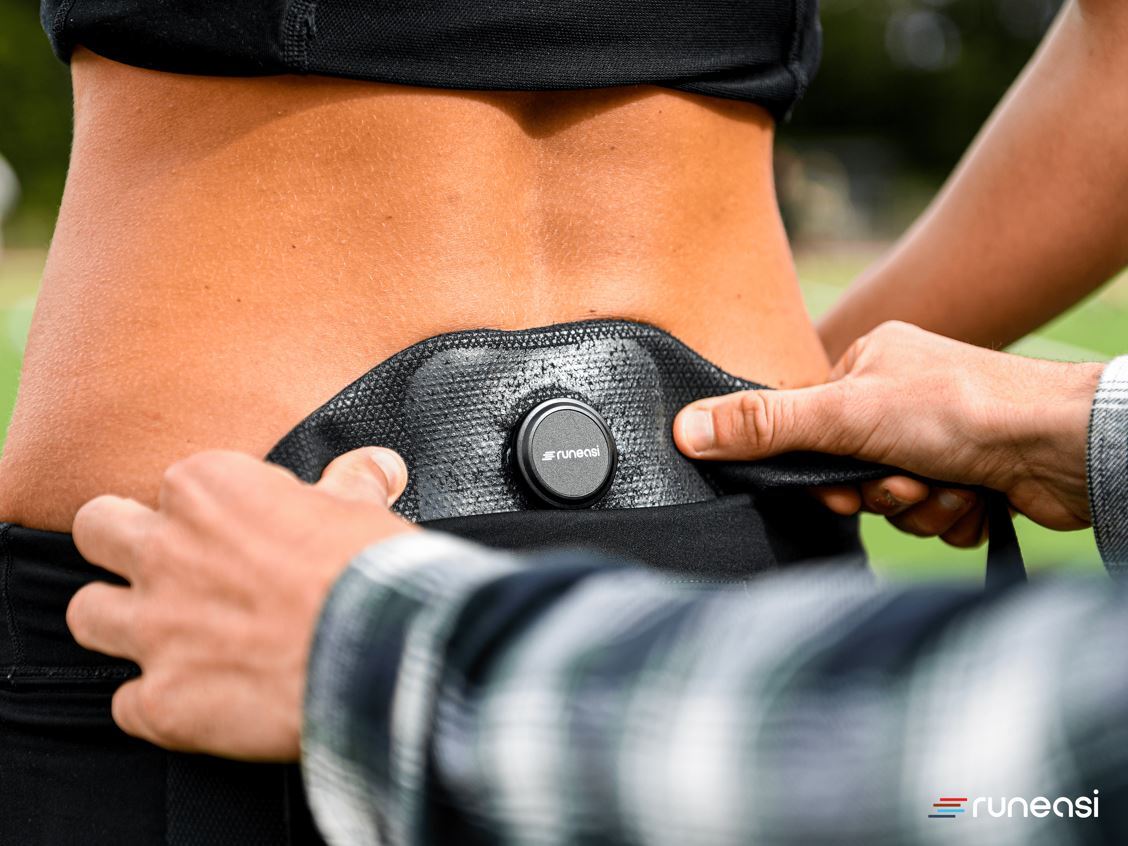
Practitioner's Viewpoint Series Brought to You by
Runeasi
Enabling value-based gait analysis for athletes with musculoskeletal conditions.
1. ASSESS
Runeasi’s real-time functionality gives you immediate and objective visual feedback about how well your patients are moving. Hence, you can immediately identify problem areas, weak links, or poor running technique.
2. ANALYZE
Test your verbal cues out on your patients as you guide them through rehabilitation and return to play/sport. Correct with confidence and surety in knowing what works for them.
3. ADDRESS
Help your patients emerge stronger than ever by giving personalized feedback on important technical parameters like impact asymmetry. Runeasi will help you improve your patients running technique and their ability to achieve your sporting goals!
Learn more: https://runeasi.ai
Book a free demo: https://calendly.com/runeasi/30min