Listen on:







Episodes
Friday Mar 12, 2021
Friday Mar 12, 2021
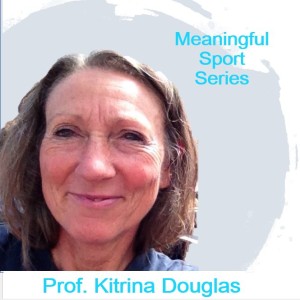
This is the second part of our conversation on narrative, identity and meaning in sport with Professor Kitrina Douglas. We explore the different stories that circulate in our sport culture and discuss how researchers can use arts-based methods to communicate their findings and make a difference in people's lives.
Kitrina Douglas is a Professor at the University of West London (UK), a Senior Research Fellow at Leeds Beckett University (UK), and a Visiting Professor at the University of Coimbra (Portugal). She has been one of the pioneers in the narrative study of athletes’ lives. Her narrative typology of performance, discovery and relational narratives of sport, developed together with Dr David Carless, has been a foundation for a number of studies that have followed.
Examples of Kitrina's numerous research articles on narrative, identity and sport include:
Challenging interpretive privilege in elite and professional sport: one [athlete’s] story, revised, reshaped and reclaimed
Living, resisting, and playing the part of athlete: Narrative tensions in elite sport
Kitrina has also had an important contribution to advancing arts-based and creative qualitative research methodologies. As you will hear in this episode, her work has been published in the form of films, documentaries, poems, songs, and stories.
For inspiration (songs, interviews etc.), you can visit Kitrina's YouTube channel.
Tuesday Mar 09, 2021
Tuesday Mar 09, 2021
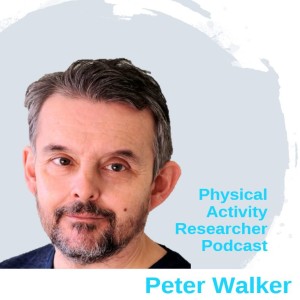
Part 1. Mr Peter Walker - Sedentary Behaviour | New book | Politics | JournalismIn this episode we are discussing with Guardian political journalist Peter Walker about his new book (The Miracle Pill – Why a sedentary world is getting it all wrong), journalism, politics and process of writing a book.
“What is the 'miracle pill', the simple lifestyle change with such enormous health benefits that, if it was turned into a drug, would be the most valuable drug in the world? The answer is movement and the good news is that it's free, easy and available to everyone.”
Timestamps:
6:30 How non-experts’ perspective differs from researchers’ perspective?
8:30 What are the most important points about sedentary lifestyle made in the book?
10:00 What eye-opening Walker learned from the interview with Danish architect?
13:30 What is needed for determined political effort to reduce sedentary behaviour?
15:30 What covid pandemic teached us about nanny-state-arguments – and what this has to do with politics related to sedentary lifestyle?
16:30 What is needed for long-term political change?
20:00 Political correspondent’s advice for researchers – how to influence political decision makers?
22:00 Why researchers should become activists?
23:00 Top tips for researchers: How to collaborate with journalists?
27:00 Highlights of the book
---
This podcast episode is sponsored by Fibion Inc. | The New Gold Standard for Sedentary Behaviour and Physical Activity Monitoring
Learn more about Fibion: fibion.com/research
---
Collect, store and manage SB and PA data easily and remotely -
Discover new Fibion SENS Motion: https://sens.fibion.com/
---
Sunday Mar 07, 2021
Sunday Mar 07, 2021
Part 2.
Series: Understanding Inter-disciplinary Research in Physical Activity
Host: Anum Urooj, La Trobe University, Melbourne, Australia Follow her at Twitter: https://twitter.com/AinaUrooj
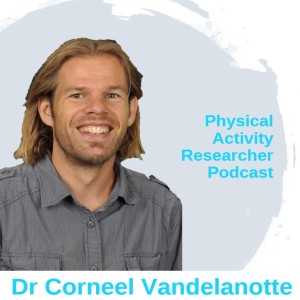
Guest: Professor Dr Corneel Vandelanotte
Corneel leads the Physical Activity Research Group and the 10,000 Steps program at the Central Queensland University. In 2004, he completed his PhD in Physical Education at the Ghent University in Belgium. In 2005, he started working at the University of Queensland and he moved to the Central Queensland University in 2009.
His research has a population-based approach to health behaviour change and is focused on the development and evaluation of innovative computer-tailored and web-, app- and tracker-based physical activity interventions.
Friday Mar 05, 2021
Friday Mar 05, 2021
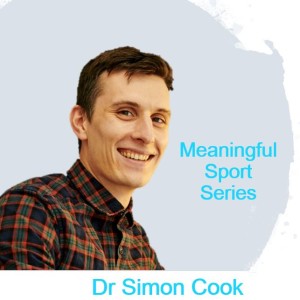
This is the second part of our episode on run-commuting with Dr Simon Cook. Today, the conversation moves to explorations of the meanings and experiences of run-commuting, running as sustainable transport and the future potential of run-commuting as a mobile practice. We also hear about Simon’s current research on running during social distancing.
If you haven’t listened to the first part yet, you'll find it here.
Simon Cook is a human geographer and runner based at Birmingham City University. He is currently a Senior Lecturer in Academic Support in the Faculty of Health, Education and Life Sciences. His PhD research (completed in 2020 in Human Geography at Royal Holloway, University of London), investigated the rise of run-commuting in the UK. His ongoing research projects focus on multi-modal mobilities, post-collision cycling practices and running during social distancing.
You can follow Simon on Twitter @SimonIanCook and read more about his work on his Jographies blog.
Tuesday Mar 02, 2021
Tuesday Mar 02, 2021
Series: Understanding Inter-disciplinary Research in Physical Activity
Host: Anum Urooj, La Trobe University, Melbourne, Australia Follow her at Twitter: https://twitter.com/AinaUrooj
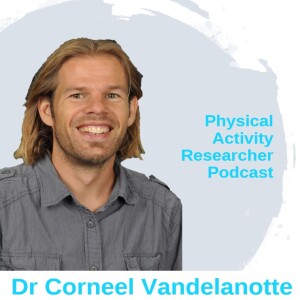
Guest: Professor Dr Corneel Vandelanotte
Corneel leads the Physical Activity Research Group and the 10,000 Steps program at the Central Queensland University. In 2004, he completed his PhD in Physical Education at the Ghent University in Belgium. In 2005, he started working at the University of Queensland and he moved to the Central Queensland University in 2009.
His research has a population-based approach to health behaviour change and is focused on the development and evaluation of innovative computer-tailored and web-, app- and tracker-based physical activity interventions.
Friday Feb 26, 2021
Friday Feb 26, 2021
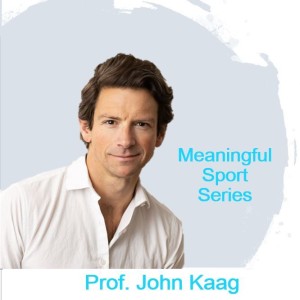
Why is existential philosophy relevant for understanding the tensions and paradoxes of our sporting lives? How does running (and other sports) become a life-affirming activity, and in other situations a way to escape the absurdity of the human condition? This fascinating conversation with Professor John Kaag explores these questions. This is the second part of the episode and a specific focus is on ageing athletes and encountering our finitude.
John Kaag is Professor and Chair of Philosophy at the University of Massachusetts Lowell. He is the author of several books including Hiking with Nietzsche: On Becoming Who you Are. Our conversation draws from his recent essay How to Live with Dying published in The American Scholar.
You can follow John on Twitter @JohnKaag.
If you didn't listen to the first part yet, you'll find it here:
https://paresearcher.podbean.com/e/kaag/
Tuesday Feb 23, 2021
Tuesday Feb 23, 2021
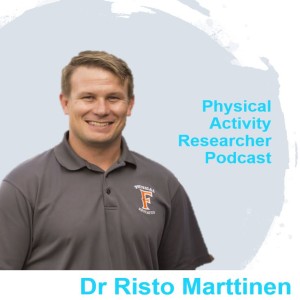
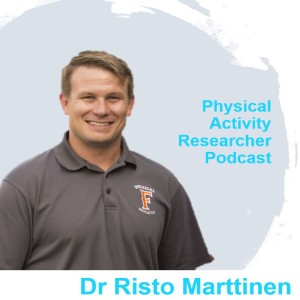
Part 3. Dr Risto Marttinen (Pt3) - Podcasting | Modern teaching tools | Article club podcast
Dr Risto Marttinen is an assistant professor at George Mason University in Fairfax, Virginia, U.S.A.
Check excellent podcast from Risto's team: Playing with Research in Health and Physical Education. You can find it for example here.
---
Link to take part in the physical education podcast study of Dr Scott McNamara:
https://uni.co1.qualtrics.com/jfe/form/SV_cI6Ixtc86Hpex4V
---
Timestamps:
5:00 Why did Risto start a podcast?
1:08:00 What you should know about using podcast as a teaching tool?
11:00 Article club podcast – why it is favourite format of Dr Marttinen?
15:00 Advantages and disadvantages of different modern teaching methods every lecturer should know.
19:00 What all educators should know about podcasting?
---
This podcast episode is sponsored by Fibion Inc. | The New Gold Standard for Sedentary Behaviour and Physical Activity Monitoring
Learn more about Fibion: fibion.com/research
---
Collect, store and manage SB and PA data easily and remotely -
Discover new Fibion SENS Motion: https://sens.fibion.com/
---
Friday Feb 19, 2021
Friday Feb 19, 2021
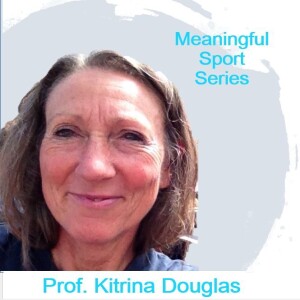
Does elite sport culture steer athletes towards particular stories, identities, feelings and actions? How can athletes resist the dominant narratives, or should they? How can athletes find different stories that allow them to experience alternative meanings and think, feel and live differently?
Kitrina Douglas is a Professor at the University of West London (UK), a Senior Research Fellow at Leeds Beckett University (UK), and a Visiting Professor at the University of Coimbra (Portugal). She has been one of the pioneers in the narrative study of athletes’ lives. Her narrative typology of performance, discovery and relational narratives of sport, developed together with Dr David Carless, has been a foundation for a number of studies that have followed. In today's episode, she shares fascinating stories from her research and life as an elite athlete, and how she developed and maintained multiple self-stories that were not disrupted by successes and failures experienced in sport.
Examples of Kitrina's numerous research articles on narrative, identity and sport include:
Challenging interpretive privilege in elite and professional sport: one [athlete’s] story, revised, reshaped and reclaimed
Living, resisting, and playing the part of athlete: Narrative tensions in elite sport
Kitrina has also had an important contribution to advancing arts-based and creative qualitative research methodologies. In addition to journal articles and academic books, her work has been published in the form of films, documentaries, poems, songs, and stories. For inspiration, you can visit her YouTube channel.
Tuesday Feb 16, 2021
Tuesday Feb 16, 2021
The current state and issues in with Fitness testing in PE.
Dr Risto Marttinen is an assistant professor at George Mason University in Fairfax, Virginia, U.S.A.
Check excellent podcast from Risto's team: Playing with Research in Health and Physical Education. You can find it for example here.
---
Link to take part in the physical education podcast study of Dr Scott McNamara:
https://uni.co1.qualtrics.com/jfe/form/SV_cI6Ixtc86Hpex4V
---
Timestamps:
2:00 Why California stopped fitness testing in schools?
8:00 4-points to make fitness testing feasible in PE
14.00 What all can go wrong in real-world data collection with school age youth?
20:00 What would be ideal activity tracker for youth?
---
This podcast episode is sponsored by Fibion Inc. | The New Gold Standard for Sedentary Behaviour and Physical Activity Monitoring
Learn more about Fibion: fibion.com/research
---
Collect, store and manage SB and PA data easily and remotely -
Discover new Fibion SENS Motion: https://sens.fibion.com/
---
Friday Feb 12, 2021
Friday Feb 12, 2021
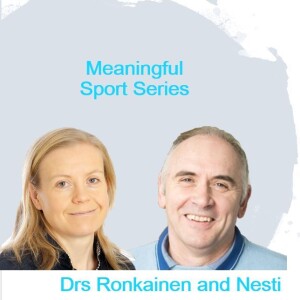
In this episode, facilitated by Olli Tikkanen, Noora and Mark discuss their work together on the spiritual dimension of sport. In this second part of the conversation, we start by exploring the ways that the spiritual dimension has been studied in sport research. We talk a bit about the interest on mindfulness in sport psychology and how it has been distanced from spirituality and philosophical ideas. Mark and Noora discuss their favourite topics in the book: applied sport psychology practice (for Mark), ageing, spirituality and sport (for Noora).
The discussion draws on the book Meaning and Spirituality in Sport and Exercise: Psychological Perspectives (Routledge, 2018). The book explores the many forms of spirituality in sport from a psychological perspective including experiences of transcendence and finding deeper meaning to moments of disjuncture such as career-threatening injury and ageing.
Tuesday Feb 09, 2021
Tuesday Feb 09, 2021
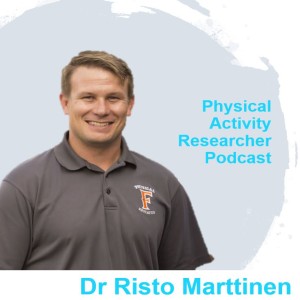
Part 1. Dr Risto Marttinen - Physical education | Lifelong participation | Student centricity
Dr Risto Marttinen is an assistant professor at George Mason University in Fairfax, Virginia, U.S.A.
The increasing focus of PA in school Physical Education (forgetting the E in PE)
The impossibility of PE (in the USA at least) to meet the MVPA goals through prescriptive PE due to time restrictions (obesity, MVPA)
Check excellent podcast from Risto's team: Playing with Research in Health and Physical Education. You can find it for example here.
Timestamps:
5:00 Why wrestling teaches a lot of life skills?
10:00 Where did the education disappear from the PE?
15:30 What is role of motor competence for lifelong participation?
18:00 How to be student-centric in PE?
20:00 Does PE need to be fun?
23:00 Simple put clever: informal sports!
24:00 What are constituents of meaningful experiences in PE?
29:00 Lifelong participation – goal of PE?
33:00 Why PE teachers do not need to study more exercise physiology?
---
This podcast episode is sponsored by Fibion Inc. | The New Gold Standard for Sedentary Behaviour and Physical Activity Monitoring
Learn more about Fibion: fibion.com/research
---
Collect, store and manage SB and PA data easily and remotely -
Discover new Fibion SENS Motion: https://sens.fibion.com/
---
Friday Feb 05, 2021
Friday Feb 05, 2021
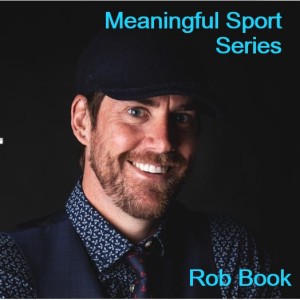
Athletes from underserved communities often have unique challenges and their pathways have received relatively little attention in the study of athletes’ careers. This episode continues exploring these athletes’ stories with Rob Book who is working on an exciting PhD project in this area. We discuss these athletes' cultural transitions and lessons learned from Rob’s work from both research and applied practice perspectives.
Before his doctoral research, Rob worked as a physical education teacher and coach in one of the most challenging school districts in the United States. He then transitioned from a teacher to a researcher to explore those athletes' developmental pathways who come from these communities.
Rob and his supervisory team have recently published two articles that form the basis of our conversation. See here:
Oatmeal is better than no meal: the career pathways of African American male professional athletes from underserved communities in the United States
Sink or swim: career narratives of two African American athletes from underserved communities in the United States.
Rob Book is a PhD candidate at the Institute of Sports Science and Clinical Biomechanics, University of Southern Denmark. His research project is 'Empowering youth athletes against the odds: Athletic talent development environments in underserved communities'.
You can follow Rob on Twitter @book_rob.

Tuesday Feb 02, 2021
Tuesday Feb 02, 2021
In this episode we are talking with Dr Peltonen about the themes related to his PhD dissertation:
Isometric Force-Time Parameters in Monitoring of Strength TrainingWith Special Reference to Acute Responses to Different Loading Resistances
Training monitoring has been a common trend in endurance sports and activities over the past several years through the use of heart rate monitors, pedometers, cycling monitors etc. Nevertheless, athletes and enthusiasts, even the same ones as in endurance sport, train in the gym without any accurate training monitors most trainees still keep a training diary by pen and paper. New miniature technologies and their lowered prices enable the development of new innovative monitoring solutions, however these solutions need valid parameters to follow adaptations in strength training as well. One possibility is to utilize isometric strength testing through in-built devices or retrofit sensors. The physiology of the human body reacts to strength training in severalways, and thus neuromuscular adaptation via stress and fatigue is a multifaceted phenomenon from the aspects of time and complex causal dependencies. Therefore, one justifiable theoretical framework is that the performance outcome is the sum of all these physiological changes with performance technique, both in terms of improvement and impairment, due to a single-session of gym exercise and regularly repeated gym sessions (i.e. strength training). However, monitoring via only one training-specific parameter may overestimate the effect of this specific training and overlook or hide other aspects of changes in physiology of the trainee. Training specificity is a well-known and longstanding principle in the field of sport and exercise science (Baker et al. 1994).
---
This podcast episode is sponsored by Fibion Inc. | The New Gold Standard for Sedentary Behaviour and Physical Activity Monitoring
Learn more about Fibion: fibion.com/research
---
Collect, store and manage SB and PA data easily and remotely -
Discover new Fibion SENS Motion: https://sens.fibion.com/
---
Friday Jan 29, 2021
Friday Jan 29, 2021
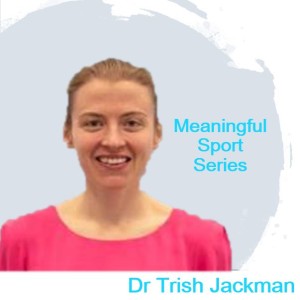
This is the second part of our discussion on flow in sport, exercise and physical activity with Dr Trish Jackman. What are the current trends and challenges in studying flow from quantitative and qualitative perspectives? What needs to be considered when studying flow in youth sport? What are the most exciting future directions in this area?
Dr Trish Jackman is a lecturer in Sport and Exercise Psychology at the University of Lincoln, who shares her thoughts on flow in sport and exercise from a research and a personal perspective.
Trish and her colleagues have published several articles on flow. Their recent articles include:
Flow in youth sport, physical activity, and physical education: A systematic review
Optimal experiences in exercise: A qualitative investigation of flow and clutch states
You can follow Trish on Twitter @Trish_Jackman
Tuesday Jan 26, 2021
Tuesday Jan 26, 2021
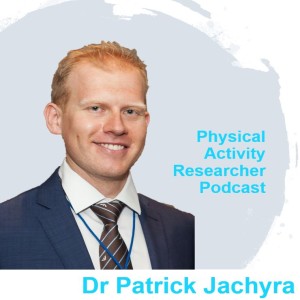
Part 2. Dr Patrick Jachyra - Online PA program | Tips & Tricks | Neurodevelopmental disorders
Dr Patrick Jachyra is working as a post-doctoral fellow at Azrieli Adult Neurodevelopmental Centre Centre for Addiction and Mental Health in University of Toronto.
His research explores, for example, physical activity participation among young people diagnosed with autism spectrum disorder (ASD). Young people with ASD are less likely to be physically active compared to their peers, and increasingly become even less active during adolescence in both scholastic and community contexts.
The combination of declining physical activity, side effects of medication treating core symptoms of ASD, and highly sedentary behaviours position young people diagnosed with ASD to experience reduced psycho-social development and well-being.
---
This podcast episode is sponsored by Fibion Inc. | The New Gold Standard for Sedentary Behaviour and Physical Activity Monitoring
Learn more about Fibion: fibion.com/research
---
Collect, store and manage SB and PA data easily and remotely -
Discover new Fibion SENS Motion: https://sens.fibion.com/
---
Sunday Jan 24, 2021
Sunday Jan 24, 2021
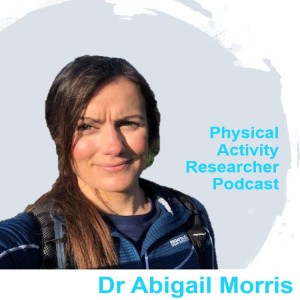
Dr Abigail Morris (Pt2) - Sedentary behaviour | Workplace | Behaviour change
Dr Abigail Morris is working as a Lecturer in Workplace Health and Well Being in Lancaster University, UK.
Her research expertise is in workplace physical activity and sedentary behaviour intervention development and evaluation. She is an interdisciplinary mixed methods researcher with experience conducting both process and outcome evaluations.
She has used a variety of methods including objective activity data, cardio-metabolic measures, self-reported survey data, ecological momentary assessment as well as focus groups and interviews. She is currently involved in designing, delivering and evaluating a Sit Less and Move More (SLAMM) multi-component intervention among call centre workers (2016-2019).
She has also been involved in the delivery and evaluation of Exertime (2018-2019) and Rise and Recharge (2019-2020) interventions which aim to reduce total and prolonged sedentary time and increase physical activity at work among traditional office workers. These projects are technology-based interventions and involve collaboration with national and international colleagues in both the UK and Australia.
---
This podcast episode is sponsored by Fibion Inc. | The New Gold Standard for Sedentary Behaviour and Physical Activity Monitoring
Learn more about Fibion: fibion.com/research
---
Collect, store and manage SB, PA and 3-axis acceleration data easily and remotely
Discover new Fibion SENS Motion: https://sens.fibion.com/
---
Friday Jan 22, 2021
Friday Jan 22, 2021
Run-commuting is an increasingly popular mobile practice in which people run between home and work. But who are the people who are doing this and what are the experiences and meanings attached to it? Does running take on new meanings when it is used as transport?
Dr Simon Cook explored run-commuting in his PhD research and shares his insights on this interesting phenomenon in this podcast. As an experienced runner, he has practiced running in various ways and also shares his own reflections on the shifts of the meaning of running in his life.
Simon Cook is a human geographer and runner based at Birmingham City University. He is currently a Senior Lecturer in Academic Support in the Faculty of Health, Education and Life Sciences. His PhD research (completed in 2020) in Human Geography at Royal Holloway, University of London, investigated the rise of run-commuting in the UK. His ongoing research projects focus on multi-modal mobilities, post-collision cycling practices and running during social distancing.
You can follow Simon on Twitter @SimonIanCook and read more about his work at https://jographies.wordpress.com/.
Tuesday Jan 19, 2021
Tuesday Jan 19, 2021
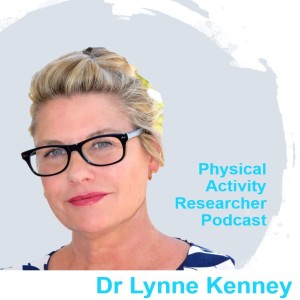
Part 2. Dr Lynne Kenney – Musical learning | Rhythm | Movement
Dr. Kenney has advanced fellowship training in forensic psychology and developmental pediatric psychology from Massachusetts General Hospital/Harvard Medical School and Harbor-UCLA/UCLA Medical School. She holds a BA in Psychology and an MA in Physical Education from the University of Southern California. In 1992, she earned her Doctorate in Psychology at Pepperdine University.
Dr. Kenney develops curriculum, programming, and activities to improve children’s cognition through coordinative cognitive-motor movement, executive function skill-building strategies, and social-emotional learning.
Dr. Kenney’s books include 70 Play Activities for Better Thinking, Self-Regulation, Learning and Behavior (Kenney & Comizio, 2016), the Social-Emotional Literacy program, Bloom Your Room™; Musical Thinking™; and Bloom: 50 things to say, think and do with anxious, angry and over-the-top-kids (Kenney & Young, 2015). Her professional development platform The Kinetic Classroom brings executive function education and cognitive-motor movement to educators and clinicians worldwide.
---
This podcast episode is sponsored by Fibion Inc. | The New Gold Standard for Sedentary Behaviour and Physical Activity Monitoring
Learn more about Fibion: fibion.com/research
---
Collect, store and manage SB and PA data easily and remotely -
Discover new Fibion SENS Motion: https://sens.fibion.com/
---
Sunday Jan 17, 2021
Sunday Jan 17, 2021
Dr Paul Kelly (Pt2) - PA | Positive vs. Negative | Research vs.Teaching | Global vs. Local
Dr Paul Kelly is a Lecturer in Physical Activity for Health at the University of Edinburgh. He is based at the Physical Activity for Health Research Centre (PAHRC). Paul previously worked at the University of Oxford, where he completed a PhD in the validity and reliability of self-reported travel behaviour.
His current research focuses on evaluating initiatives aimed at increasing physical activity, and the health benefits (physical and mental) of these initiatives. He is particularly interested in walking and cycling, and is currently involved in evaluating the new 20mph schemes in Edinburgh and Belfast to see how speeds, collisions and walking and cycling may be impacted. He is also involved in multiple systematic and scoping reviews using data from large cohort studies and RCTs. He has a related research interest in improving the way we assess physical activity behaviour and energy expenditure through more valid and reliable measures.
---
This podcast episode is sponsored by Fibion Inc. | The New Gold Standard for Sedentary Behaviour and Physical Activity Monitoring
Learn more about Fibion: fibion.com/research
---
Collect, store and manage SB and PA data easily and remotely -
Discover new Fibion SENS Motion: https://sens.fibion.com/
---
Friday Jan 15, 2021
Friday Jan 15, 2021
Running - as well as other sports - can provide moments of transcendence, but it can also become a distraction and an escape from the absurdity of human existence. How can existential philosophy, especially the works of Camus and Nietzsche, help us understand how we slip from running as a life-affirming activity to running as an obsession?
In this episode, John Kaag shares his personal story as a runner and leads us to explore running (and other sports) from an existential philosophical perspective. The specific focus is on Camus's philosophy and the key ideas such as 'the absurd' and 'philosophical suicide' and how we can think of these in the context of our sporting activities.
John Kaag is Professor and Chair of Philosophy at the University of Massachusetts Lowell. He is the author of several books including Hiking with Nietzsche: On Becoming Who you Are. Our conversation draws from his recent essay How to Live with Dying published in The American Scholar.
You can follow John on Twitter @JohnKaag.
Tuesday Jan 12, 2021
Tuesday Jan 12, 2021
This is a bonus episode introducing our new host Anum Urooj and her new series. The series aims to get the perspectives of researchers, policy makers and practitioners from across the globe on the area of physical activity from multiple disciplines such as Psychology, Public Health, Physical Education, Sport and Exercise Sciences and Sport Management.
The topics covered will depend on the expertise of the guest but will broadly include definition of PA, theoretical perspectives, measurement of PA, benefits of PA, facilitators and barriers for PA participation, programmes/interventions to address physical inactivity crisis and many more. Stay tuned!
Hello and Welcome to Physical Activity Researcher Podcast!
Physical Activity Researcher Podcast is the source of the latest research findings on all things related to physical activity, exercise, and health. World-renowned scientists and experts as guests in an informal and relaxed interview style format. The podcast is for anyone who likes to learn scientific and evidence-based knowledge of physical activity, exercise, and health.
Physical Activity Researcher Series
The latest research findings in exercise physiology, physical education, coaching sciences, sport psychology, epidemiology, and public health.
Meaningful Sport Series
Meaningful Sport is dedicated to the exploration of meaning and meaningful experiences in sport and physical activity.
Practitioner’s Viewpoint Series
Practitioner’s Viewpoint Series has health and fitness professionals as guests. This series is for you if you are a Personal Trainer, Physiotherapist, Medical Doctor, Health Coach, or anyone working as a health and fitness professional.

Podcast brought to you by
Fibion
Fibion is the new gold standard for sedentary behaviour and physical activity data collection for researchers. Cloud-based modern solutions make data collection easier than it has never been.
---
Fibion Pro is the first physical activity analysis product targeted from the beginning for health and fitness professionals. It is accurate and easy to use in connection with professional consultation meetings.
Practitioner's Viewpoint Series Brought to You by
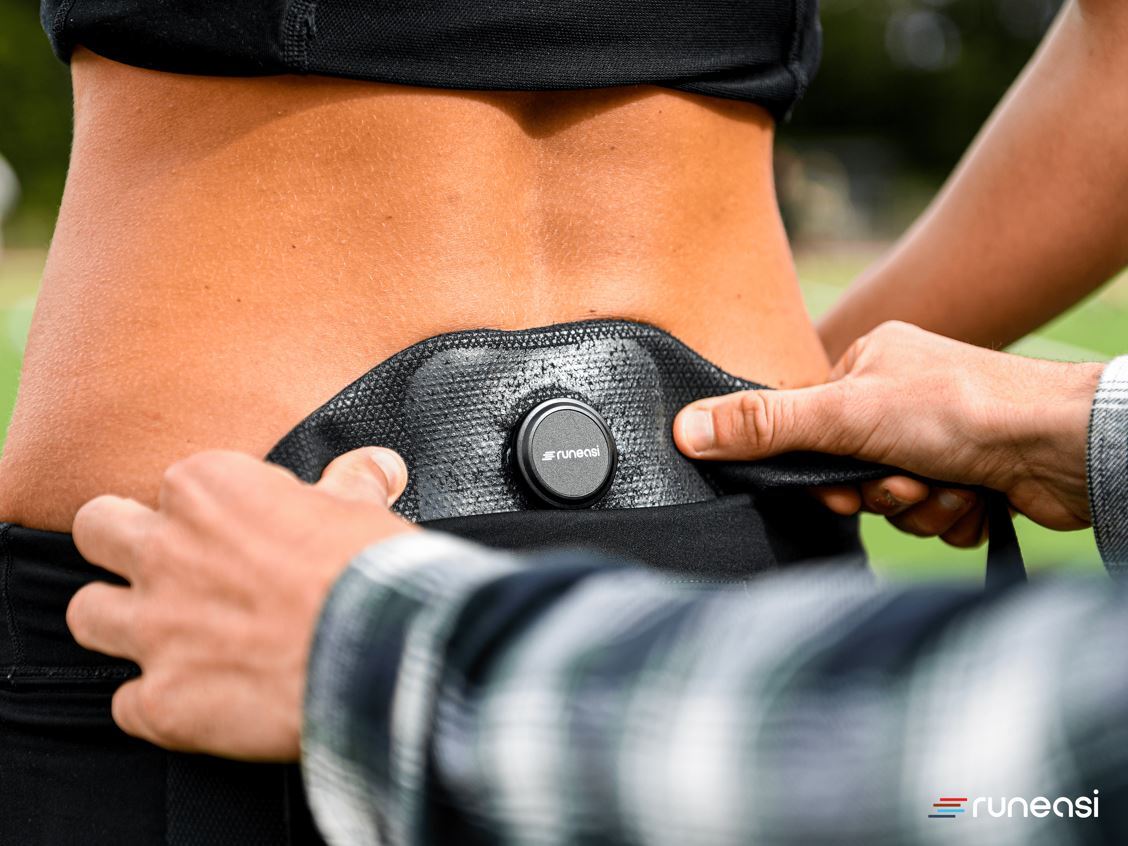
Runeasi
Enabling value-based gait analysis for athletes with musculoskeletal conditions.
1. ASSESS
Runeasi’s real-time functionality gives you immediate and objective visual feedback about how well your patients are moving. Hence, you can immediately identify problem areas, weak links, or poor running technique.
2. ANALYZE
Test your verbal cues out on your patients as you guide them through rehabilitation and return to play/sport. Correct with confidence and surety in knowing what works for them.
3. ADDRESS
Help your patients emerge stronger than ever by giving personalized feedback on important technical parameters like impact asymmetry. Runeasi will help you improve your patients running technique and their ability to achieve your sporting goals!
Learn more: https://runeasi.ai
Book a free demo: https://calendly.com/runeasi/30min